Main Stand redevelopment thread

Further development of the Whitehorse end or Arthur is primarily just to increase capacity. The main stand development includes upgrading all the core elements of the stadium; new changing rooms, new offices, new shop, new fan zone, new hospitality suites, new media gantry, new dugouts, international pitch size, etc, as well as increasing capacity by 6k. It will make a massive difference. The other 2 stands need upgrading but the benefits are a lot less bang for your buck.
 
Thank you for lots of though provoking discussion today. regarding the Whitehorse Lane End, I feel that it is logical for CPFC not to express any WHL thoughts until the smoke screens of the new main stand and the Arthur Waite Stand.
Sainsbury's is a commercial organisation and it is sensible not to encourage them to think about taking money from CPFC is their thoughts for the future. Constant mention of how hard extension of WHL would be can only be useful until CPFC is ready to go.
When you consider the Arthur, there would be several issues. One would be that we would need to keep the stand open for a major build, as with the current project, or lose 9k of capacity. I doubt that loss would be acceptable. Park Road would have to be closed to the public and used as access to the site.
All this depending on the right to light issues being resolved.

If Parish announces a new truss support for the existing roof, then we can forget the whole thing for the foreseeable future. That would suggest that the Whitehorse is next in line if anything is.
 
especially given how long it's taken to start on the main stand replacement.
I'd be interested to know if those delays were simply down to Parish only wanting to focus on one project at a time. I mean, he could have just delegated the task or brought in an experienced project manager, so I doubt it's because he personally wants to handle everything.

Perhaps he was concerned that if Palace tackled the academy and the stand at the same time and the costs escalated on either or both, the club could be overstretched beyond breaking point?
 
Sainsburys are our tenants, right?

At the end of their contractual term, we can block their right to a new lease on the ground that we intend to use the site ourselves.

However, it appears that Sainsburys had a financial involvement in the current redevelopment. This suggests that they will be here for the longer term.
If only
 
I'd be interested to know if those delays were simply down to Parish only wanting to focus on one project at a time. I mean, he could have just delegated the task or brought in an experienced project manager, so I doubt it's because he personally wants to handle everything.

Perhaps he was concerned that if Palace tackled the academy and the stand at the same time and the costs escalated on either or both, the club could be overstretched beyond breaking point?
Liverpool bought up a whole street incrementally to build their 18k stand.

I believe, and you will correct me if I'm wrong, that buying up private houses and CPOs are quite different. One cannot be forced to sell a property without a CPO, but I'm guessing that accepting a generous offer for your house changes things a bit.
In that event, could we just demolish said houses and start building? Or would we still need to replace them?
I would imagine that a CPO would only be upheld if the club could prove that any project was of measurable benefit to the local area. Would that still apply if people sold up voluntarily?
 
Liverpool bought up a whole street incrementally to build their 18k stand.

I believe, and you will correct me if I'm wrong, that buying up private houses and CPOs are quite different. One cannot be forced to sell a property without a CPO, but I'm guessing that accepting a generous offer for your house changes things a bit.
In that event, could we just demolish said houses and start building? Or would we still need to replace them?
I would imagine that a CPO would only be upheld if the club could prove that any project was of measurable benefit to the local area. Would that still apply if people sold up voluntarily?
Demolition and the planning system interact in a convoluted way.

Basically, planning permission is required for most works of demolition, but the right to demolish is granted in advance by standing legislation, unless that has been withdrawn in your particular case. In any event, you have to give the council notice of the demolition work so that they can approve the method. Whilst they are thinking about that, they may also attempt to withdraw your rights to demolish if it's appropriate to do so. It can get very fiddly, and usually only good for the lawyers.

It doesn't come up very often. Usually you include the demolition you want to do as part of your overall planning application for the replacement structure, as happened with the Main Stand and the Wooderson Close houses. That avoids all the potential mucking around involved in gradual demolition by stealth. The downside is that the whole project, including the demolition, gets assessed against planning policy, which doesn't like the loss of housing. Not insurmountable, but a significant complication. Ultimately, planning is about weighing the pros and cons, and the loss of the houses would be assessed in the context of wider economic benefits associated with the scheme. Based on the main stand project, Croydon council seems very supportive of redevelopment at selhurst, so it could be done. I would expect replacement housing elsewhere as an absolute minimum, though.

That's just to get planning permission. To actually demolish the houses the club would, of course, need to own them. One route is to buy them one at a time as and when they come on the market. Not unheard of. Usually done on the quiet. Or, the club could make overly generous offers for the houses and see if that works. Usually done if the project has become imminent rather than theoretical. Or, the club could ask the council to use a Compulsory Purchase Order (CPO) to buy the houses by force at market rates. That can only be done if essential for a specific public benefit. Redevelopment of selhurst might be such a benefit, though possibly not so great as to justify such a draconian CPO. It would be very different to, for instance, using CPO to get the slither of carpark from Sainsbury's for the main stand. That would have been an open and shut case if it had got as far as a CPO.

Liverpool did a mix of all three for their stand project I believe. I'm not sure that there is the same demand for housing up there, though, as in London and the club has a much more central role in the international image of the city than Palace do, so not really a straight comparison.

Plus, Liverpool were absolute arseholes to their neighbours. They ran the streets down by letting the houses they had bought go to rack and ruin, piling on unfair pressure on those remaining residents who didn't want to sell until they had no choice. They totally shat on a community. The papers touched on it once or twice but soon went back to portraying the club as having a special bond with it's poor but honest working class people, and all that s***.

 
Last edited:
Demolition and the planning system interact in a convoluted way.

Basically, planning permission is required for most works of demolition, but the right to demolish is granted in advance by standing legislation, unless that has been withdrawn in your particular case. In any event, you have to give the council notice of the demolition work so that they can approve the method. Whilst they are thinking about that, they may also attempt to withdraw your rights to demolish if it's appropriate to do so. It can get very fiddly, and usually only good for the lawyers.

It doesn't come up very often. Usually you include the demolition you want to do as part of your overall planning application for the replacement structure, as happened with the Main Stand and the Wooderson Close houses. That avoids all the potential mucking around involved in gradual demolition by stealth. The downside is that the whole project, including the demolition, gets assessed against planning policy, which doesn't like the loss of housing. Not insurmountable, but a significant complication. Ultimately, planning is about weighing the pros and cons, and the loss of the houses would be assessed in the context of wider economic benefits associated with the scheme. Based on the main stand project, Croydon council seems very supportive of redevelopment at selhurst, so it could be done.

Of course, the club would need to own the houses. One route is to buy them one at a time as and when they come on the market. Not unheard of. Usually done on the quiet. Or, the club could make overly generous offers for the houses and see if that works. Usually done if the project has become imminent rather than theoretical. Or, the club could ask the council to use a Compulsory Purchase Order (CPO) to buy the houses by force at market rates. That can only be done if essential for a specific public benefit. Redevelopment of selhurst might be such a benefit, though possibly not so great as to justify such a draconian CPO. It would be very different to, for instance, using CPO to get the slither of carpark from Sainsbury's for the main stand. That would have been an open and shut case if it had got as far as a CPO.

Liverpool did a mix of all three for their stand project I believe. I'm not sure that there is the same demand for housing up there, though, as in London and the club has a much more central role in the international image of the city than Palace do, so not really a straight comparison.

Plus, Liverpool were absolute arseholes to their neighbours. They ran the streets down by letting the houses they had bought go to rack and ruin, piling on unfair pressure on those remaining residents who didn't want to sell until they had no choice. They totally shat on a community. The papers touched on it once or twice but soon went back to portraying the club as having a special bond with it's poor but honest working class people, and all that s***.
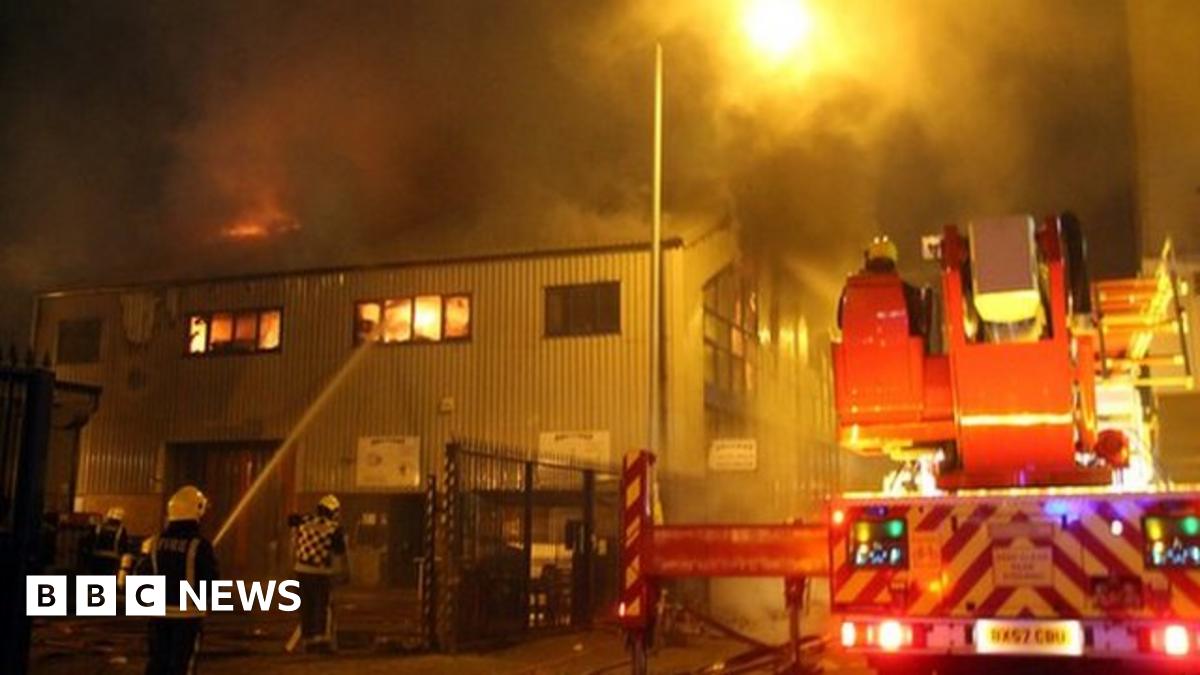
The other option is to do what Tottenham done, and just burn down neighbouring buildings.......alledgedly
 
'Most' being the key word. Those businesses that hadn't sold, and were holding up proceedings somehow just went up in flames. Uncanny.
BBC News - Tottenham Hotspur stadium dispute firm blaze 'suspicious' - BBC News
 
You might be surprised how often obstructive buildings to development catch fire.
 
Demolition and the planning system interact in a convoluted way.

Basically, planning permission is required for most works of demolition, but the right to demolish is granted in advance by standing legislation, unless that has been withdrawn in your particular case. In any event, you have to give the council notice of the demolition work so that they can approve the method. Whilst they are thinking about that, they may also attempt to withdraw your rights to demolish if it's appropriate to do so. It can get very fiddly, and usually only good for the lawyers.

It doesn't come up very often. Usually you include the demolition you want to do as part of your overall planning application for the replacement structure, as happened with the Main Stand and the Wooderson Close houses. That avoids all the potential mucking around involved in gradual demolition by stealth. The downside is that the whole project, including the demolition, gets assessed against planning policy, which doesn't like the loss of housing. Not insurmountable, but a significant complication. Ultimately, planning is about weighing the pros and cons, and the loss of the houses would be assessed in the context of wider economic benefits associated with the scheme. Based on the main stand project, Croydon council seems very supportive of redevelopment at selhurst, so it could be done. I would expect replacement housing elsewhere as an absolute minimum, though.

That's just to get planning permission. To actually demolish the houses the club would, of course, need to own them. One route is to buy them one at a time as and when they come on the market. Not unheard of. Usually done on the quiet. Or, the club could make overly generous offers for the houses and see if that works. Usually done if the project has become imminent rather than theoretical. Or, the club could ask the council to use a Compulsory Purchase Order (CPO) to buy the houses by force at market rates. That can only be done if essential for a specific public benefit. Redevelopment of selhurst might be such a benefit, though possibly not so great as to justify such a draconian CPO. It would be very different to, for instance, using CPO to get the slither of carpark from Sainsbury's for the main stand. That would have been an open and shut case if it had got as far as a CPO.

Liverpool did a mix of all three for their stand project I believe. I'm not sure that there is the same demand for housing up there, though, as in London and the club has a much more central role in the international image of the city than Palace do, so not really a straight comparison.

Plus, Liverpool were absolute arseholes to their neighbours. They ran the streets down by letting the houses they had bought go to rack and ruin, piling on unfair pressure on those remaining residents who didn't want to sell until they had no choice. They totally shat on a community. The papers touched on it once or twice but soon went back to portraying the club as having a special bond with it's poor but honest working class people, and all that s***.
Thanks for the detailed response.
 

Holmesdale Online Shop

Back
Top